Is hosted VoIP reliable? Here is exactly how we keep your calls up.
It is the fair question every business asks before switching. The honest answer is that reliability is a design choice, and we made it. Carolina Digital Phone runs on three geo-redundant data centers, backup power we test every week, and local engineers who answer when it matters.
Yes, when it is engineered to be. Here is the straight talk.
We will not pretend the internet never hiccups. A traditional landline runs on its own copper and can stay up during a local internet outage, and for years that was the knock on VoIP. It was a fair point.
What changed is the engineering. A serious VoIP provider no longer puts your phones on a single connection in a single building. We spread the system across multiple data centers in different cities, so if one location has a problem, another carries the load with no downtime. Your calls keep flowing through storms, power loss, and outages.
That is the difference between VoIP that hopes nothing goes wrong and VoIP that is built for when it does. The rest of this page shows you exactly how ours is built.
If one data center goes down, another picks up the call.
Geographic redundancy is the whole point. No single building, storm, or power outage can take your phones offline, because your service does not live in just one place.
Three data centers, no single point of failure
Most providers cannot tell you where your phone service actually lives. We can name all three locations, and we built each one to keep you connected when the others cannot.
Our home base, with power we test weekly
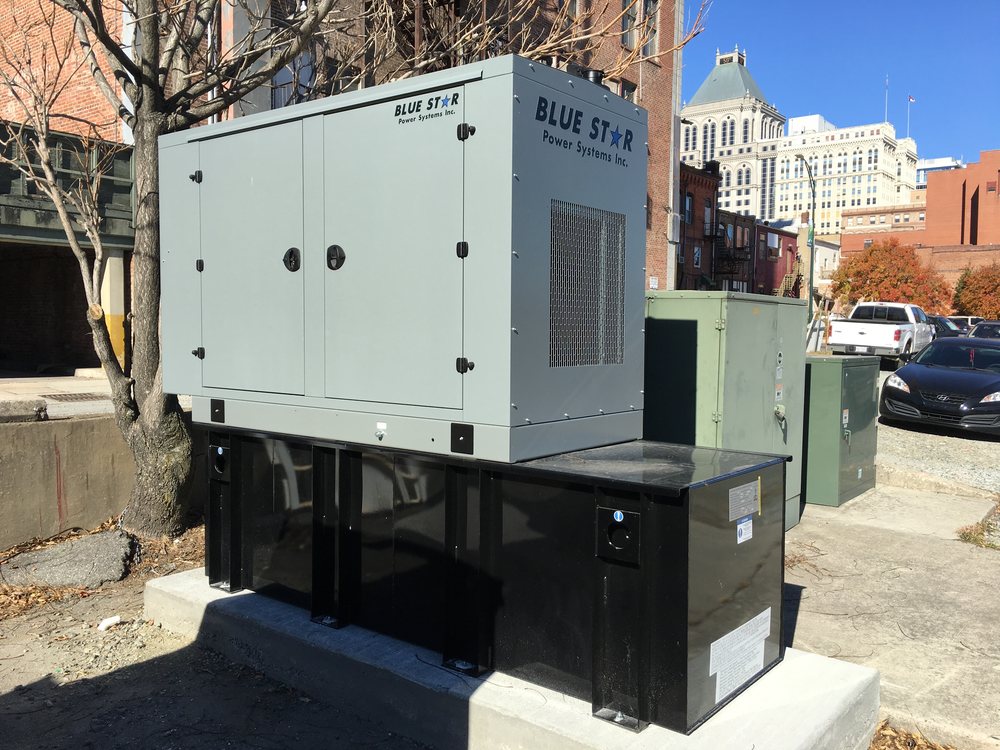
Our primary data center sits in downtown Greensboro, where we maintain a 125 KW standby generator with more than 600 gallons of diesel on site. We test it every single week, so a utility outage never takes our servers or your connections down. Local engineers are minutes away.
Colocated inside MCNC, the state's research network
Our second site is colocated in the MCNC data center in Research Triangle Park, a Tier 3 facility with dual power, multiple 10 Gig uplinks, and N+1 redundant UPS and cooling, monitored 24x7x365. Through a private peering connection to MCNC's NCREN network, this is our primary link to government agencies and schools across North Carolina, with voice traffic that stays on-net for better audio and a more secure path.
A carrier-class site, far outside our weather
Our third location is a carrier-class facility at Prime Data Centers in Dallas, with concurrently maintainable infrastructure, layered physical security, multiple carriers on site, and SOC 2 Type II controls. Putting a site well outside North Carolina means a regional storm or grid event here at home can never take your whole service offline.
Three cities, three power systems, three independent paths to the internet. That is what geo-redundant actually means, and it is why your phones stay up when a single-site system would already be dark.
What geo-redundancy actually does during an outage
Redundancy is not a marketing word for us. It is a set of specific engineering decisions that quietly protect your calls every day, most of which you will never have to think about.
One site fails, another takes over
If any single data center has trouble, the others carry your traffic automatically. There is no single building that can take you offline.
Fiber that reroutes itself
Multiple synchronous fiber connections with full BGP routing find a healthy path on their own, so a cut line in one place does not stop your calls.
Backup power at every site
Generators and redundant UPS keep the servers running through a utility outage, including our own 125 KW generator tested weekly in Greensboro.
Over-engineered for peak
We build for more capacity than you will ever use on your busiest day, so call quality holds steady even when volume spikes.
Secured against spam and fraud
We meet standards like STIR/SHAKEN to fight robocalls and spoofing, with compliant options for healthcare, schools, and government.
Private peering keeps your voice off the open internet.
Through our direct peering with MCNC in Greensboro, voice traffic for schools and agencies stays on-network. That means lower latency, clearer audio, and a more secure connection than calls that bounce across the public internet.
Reliable does not have to mean a worse-sounding call.
The old worry was that internet calls sounded thin or dropped out. On a business-grade connection with quality-of-service settings that put voice first, hosted VoIP matches or beats a traditional landline, and it does it with HD audio most landlines never had.
The reliability and the quality come from the same place: a network designed for voice rather than one that treats your calls like any other traffic. That design is the whole reason we run our own data centers instead of renting space on someone else's afterthought.
Chosen by North Carolina's research and education network
Carolina Digital Phone is one of the voice providers MCNC works with to deliver phone service and unified communications over its statewide NCREN network. Schools, colleges, and government agencies across North Carolina connect to us through a private peering link in Greensboro, which is exactly the kind of validation you cannot buy. You can read it on MCNC's own site.
In a crisis, you want a local company you know, trust, and like.
Here is the part the spec sheet does not capture. When the power is out, the storm is bad, and your customers cannot reach you, you do not want a ticket number in a queue on the other side of the country. You want a name. You want a local team that picks up, knows your setup, and owns the fix.
That is who we are. Carolina Digital Phone has been a North Carolina company since 2000, with a founder whose career in technology spans more than 45 years, from the first Apple computer store in the state to today's AI. We build the redundant network so the crisis never reaches you, and we answer the phone if it ever does.
VoIP reliability questions, answered
The reliability questions businesses ask most before they switch. If yours is not here, a quick call to a network engineer will sort it out.
Yes, when it is engineered for it. Carolina Digital Phone runs across three geo-redundant data centers in Greensboro, Research Triangle Park, and Dallas, so if one site has a problem another carries your calls with no downtime. Pair that with a business-grade internet connection and you have a phone system built to stay up.
Two things protect you. First, our data centers have backup power, including a 125 KW generator with more than 600 gallons of diesel in Greensboro that we test weekly. Second, calls can fail over to mobile devices and other locations, so even if your office loses power, your business line keeps ringing somewhere it can be answered.
It is as good or better. On a business-grade connection with quality-of-service settings that prioritize voice, hosted VoIP delivers HD audio that most landlines never offered. Our private peering with MCNC keeps voice traffic on-network for lower latency and clearer calls.
It means your phone service lives in more than one place at the same time. We run data centers in three different cities with independent power and internet paths. If any one location goes offline, the others keep your calls flowing, so no single storm, outage, or building can take your phones down.
MCNC runs NCREN, the research and education network that connects schools, colleges, and government agencies across North Carolina. Carolina Digital Phone is one of the voice providers MCNC works with, and we connect through a private peering link in Greensboro. It is independent proof that institutions which cannot afford downtime trust our network.
A local North Carolina engineer who knows your setup, not an offshore queue. We have been a Greensboro company since 2000. We build the redundancy so problems rarely reach you, and when you call, a real person owns the fix.
See the network design that keeps your business connected.
Ask a Carolina Digital Phone pre-sales engineer to walk you through exactly how our three data centers, backup power, and private peering would protect your calls. No pressure, no runaround, just a clear look at how it works.
Talk to a network engineer