

Buyer's Guide · Business VoIP
How to Compare VoIP Vendors Without Surprises
What to ask about support, pricing, call flow, number porting, outages, and E911 before you sign anything.
Published: | Last updated:
Three proposals are on your desk. Each one promises an auto attendant, a mobile app, voicemail to email, and unlimited calling. The prices are a few dollars apart. On paper they are the same phone system.
They are not the same phone system. A business phone service can look identical on a proposal and work very differently once your staff starts using it. When you compare VoIP vendors, the real question is not who has the longest feature list. It is who will help you build a call flow that works, move your numbers carefully, answer when something fails, and give you a monthly price that matches the invoice.
I have been on the vendor side of that table since 2000. This guide is the checklist I would hand a friend who was about to choose a business VoIP provider or replace a small business phone system, including the questions that are uncomfortable for companies like mine to answer.
Local Business VoIP is the small-business site of Carolina Digital Phone, Inc., a Greensboro, North Carolina company that provides hosted voice, business text messaging, and AI receptionist service to businesses, schools, and government offices. We are one of the vendors you could be comparing, so hold us to everything on this page.
Quick answer
To compare VoIP vendors without surprises, judge each one on seven things: the support model, the total price with taxes and fees, help designing your call flow, how number porting is managed, the plan for power and internet outages, E911 location management, and who handles implementation. Ask for a sample invoice instead of a quote, walk through real call scenarios, and call the support line before you sign.
- VoIP vendor (VoIP provider)
- A company that sells business phone service delivered over the internet. Also called a hosted VoIP, hosted PBX, cloud phone system, or UCaaS provider.
- Support model
- Who answers when you need help, what they are able to change, and whether anyone can come to your site.
- Call flow
- The path a caller follows from the first greeting to the person or team who can help.
- Endpoint
- Any device or app that makes calls: desk phones, conference phones, softphones, analog adapters.
- Number porting
- Moving your existing phone numbers from your current carrier to a new one.
- Redundancy
- More than one path, system, or facility available if a component fails.
- Dispatchable location
- The address plus building, floor, suite, or room that tells 911 responders where to go.
- Reseller
- A company that sells and supports a phone platform operated by someone else.
What should you compare first when choosing a VoIP vendor?
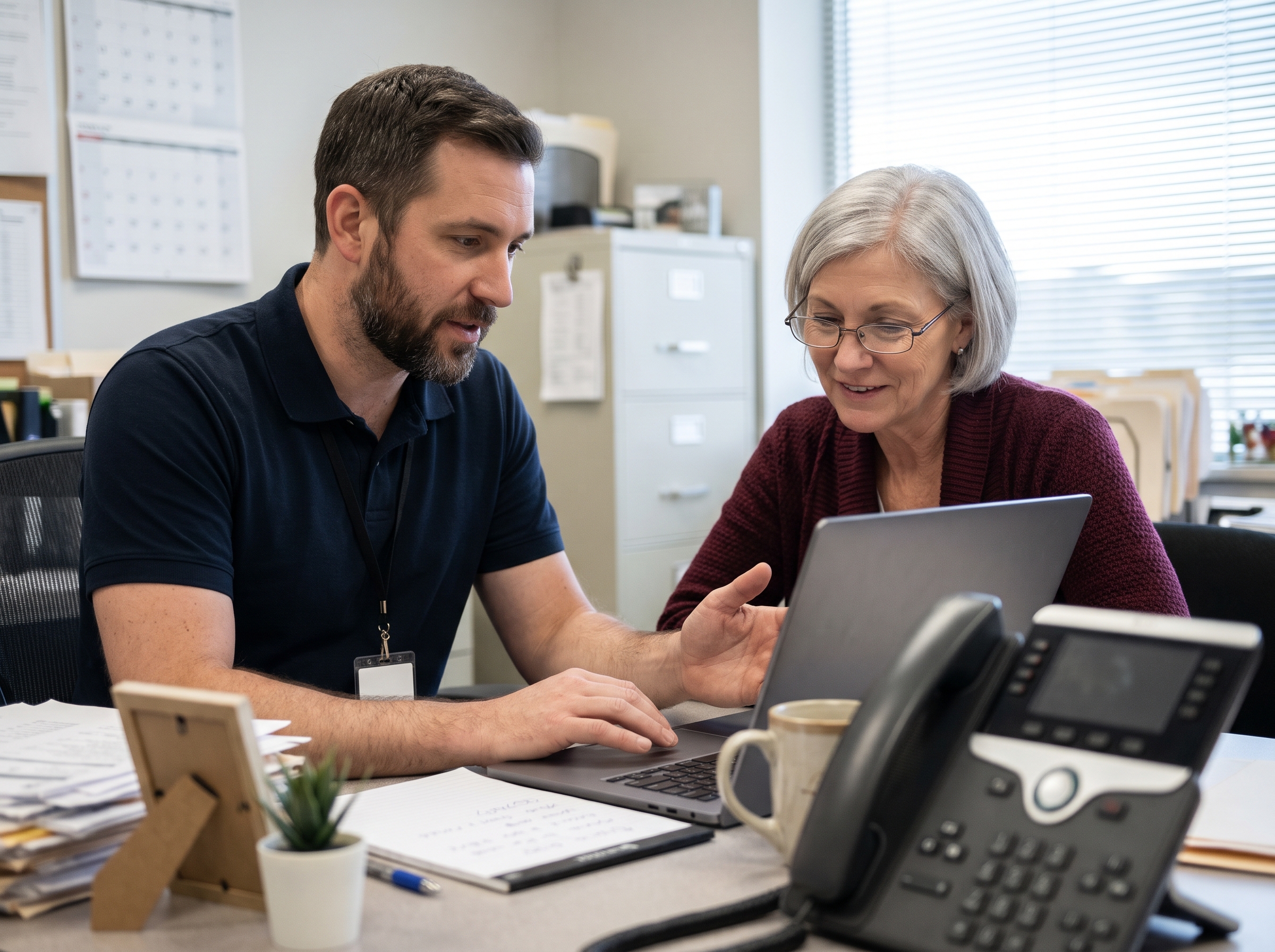
Compare the support model first. Features are nearly the same across business VoIP providers, whether you are shopping for small business VoIP or a business phone system for several hundred people. What differs is what happens on the day something goes wrong.
Many hosted phone providers sell nationally through a website, a partner channel, or a large support center. That model can work well for an organization with experienced IT staff, a simple setup, and little need for on-site help. It often comes with a lower advertised starting price. If that describes you, it may be the right choice.
Before you decide, ask who owns your support request from beginning to end:
- Does the person who answers have access to my system configuration?
- Can they change a call route, investigate one-way audio, or chase a number porting problem?
- If a technician needs to visit my site, is that possible?
- Do you operate the platform, or do you resell one? If you resell, who handles an escalation?
- Where is the platform hosted?
A vendor that runs its own platform and support team has more direct responsibility for the outcome. A reseller can still give good local service. It is simply fair to know who controls the underlying service when a problem is not solved at the first level.
Local is not automatically better. A national provider may be the sensible choice when your offices are spread across the country and you want one standardized agreement. For organizations in North Carolina, a local relationship tends to matter most during a move, an expansion, a weather closure, or a staffing change. We laid out that trade-off honestly in local versus national VoIP providers in North Carolina.
How do the big national VoIP brands fit into the comparison?
The national brands belong on your shortlist, and they should be judged by the same checklist as everyone else. If you have searched for the best business phone system, you have seen the names: RingCentral, Nextiva, Ooma, Dialpad, Vonage, 8x8, Zoom Phone, and others. They are large, capable companies with broad feature sets, many software integrations, and heavy investment in AI features.
Where they differ from a regional provider is mostly in how service is delivered. Ordering and setup are commonly done online. Advertised rates usually assume annual billing, and promotional offers such as free months are common. Support is typically handled by large teams working from a queue. None of that is a criticism. It is a model, and for some organizations it is the right one.
What I would caution against is comparing a national provider's advertised starting price with a local provider's full quote. Put both through the steps below. Ask both for the invoice. Then decide.
How do you compare VoIP pricing beyond the per-user price?
You compare VoIP pricing by asking for the complete recurring total and every one-time charge in writing. A low monthly seat price is easy to advertise. It does not tell you what the service costs once you add phones, setup, calling features, taxes, regulatory fees, installation, and support.
A plain quote should answer these before you sign:
- Are taxes and regulatory fees included or added later?
- Are desk phones purchased, rented, or supported if I bring my own?
- Are onboarding, configuration, and staff training included?
- Are call recording, business texting, mobile apps, and reporting separate charges?
- Does the rate change after a promotional period?
- Is there a contract, does it renew automatically, and what does it cost to leave?
- Is there a fee to move my numbers away if my needs change?
- What happens to the price if I add or remove users?
Also clarify what counts as a user. An office may have 20 employees and 35 endpoints once conference phones, lobby phones, common-area devices, softphones, and analog adapters are counted. A school may need many classroom extensions that do not need the same calling plan as an administrator. If your organization has seasonal staff, shared phones, or rotating departments, flexibility may matter more than the lowest price on day one.
The goal is not to make every vendor price the same way. It is to make the comparison fair. Our guide to what the cheapest VoIP service really costs shows the line items to look for.
What does a fair VoIP vendor comparison look like?
A fair VoIP vendor comparison puts the same seven questions to every vendor and writes the answers side by side. Use this scorecard.
| What to compare | Ask every vendor | A strong answer sounds like | A warning sign |
|---|---|---|---|
| Support model | Who answers, and what can they change? | A named team with access to your configuration | "Open a ticket and someone will respond" |
| Total price | Can I see a sample invoice? | One page with every tax, fee, and one-time charge | "Taxes and fees are calculated at billing" |
| Call flow | Will you design it with us? | A working session on your real scenarios | A link to help articles |
| Number porting | Who manages it, and in what order? | A written plan and a scheduled cutover | "Just cancel your old service" |
| Continuity | What do callers hear if my office is down? | Failover you can see demonstrated | An uptime percentage and nothing else |
| E911 | How are locations entered and updated? | Per-device locations and a way to test | "It uses your billing address" |
| Implementation | Who is with us on go-live day? | A person, with training before the switch | Phones shipped in a box with a login |
Why should you look at call flow and not just features?
You should look at call flow because features only help when someone sets them up to match your day. Nearly every hosted VoIP business phone system offers auto attendants, ring groups, call queues, voicemail to email, mobile apps, and call forwarding. The names are familiar. The useful question is whether the vendor will configure them around how you actually work.
A law office may need separate paths for new clients, existing clients, billing, and urgent after-hours calls. A property management company may need maintenance calls to reach an on-call person after the office closes. A town department may need callers routed by service area without exposing direct staff numbers.
Ask each vendor to walk through a few real scenarios:
- What happens when the receptionist is away?
- What happens when every person in a queue is busy?
- Can a manager change holiday hours without opening a support ticket?
- Can calls ring a desk phone and a mobile app at the same time?
Clear answers here are worth more than a long list of features you may never use. For the details, see our guides on building auto attendant menus that help, when calls should overflow, and business calls on mobile without your personal number.
Business texting deserves the same attention. Confirm whether staff can text from a business number, how messages are shared and retained, and who can reach a shared inbox when an employee leaves. Texting improves responsiveness, but it needs an owner and simple rules.
One question, three vendors
The business manager at a small private school had three proposals that looked alike. Same features. Prices within four dollars a user. She had been asked to recommend one by Friday.
She called each vendor back and asked a single question: "It snowed overnight and we are closing. It is 5:45 in the morning and I am at home. Walk me through what I do so parents hear the closing message."
The first salesperson said he would have to get back to her. The second said there was a knowledge base article and offered to email the link. The third said, "Do you have your cell phone? Let's do it right now on a demo account," and four minutes later she had recorded a greeting from her kitchen and heard it play on a test number.
She told us afterward that she stopped reading the feature lists that afternoon. The proposals had not changed. What changed was that she had seen what a Tuesday with each vendor would be like.
This story is a blend of several organizations we have worked with. The details are changed. The pattern is real.
How should a VoIP vendor manage number porting?
A VoIP vendor should manage number porting as a planned project with a written sequence, not as a form you fill out and hope. Number porting is the process of moving your current phone numbers to a new carrier. It is routine, and you have the right to do it under the FCC's number porting rules. It is not instant. Timing depends on your existing provider, the type of numbers, and whether the account records match exactly.
A careful vendor will review your current bill, verify every number, explain the paperwork, and give you a plan for the changeover. You should know whether the old service must stay active until the port completes and how inbound calls will be handled during the transition.
Do not cancel your existing phone service because you signed a new agreement. Cancelling early can interfere with the port and put your numbers at risk. If a vendor tells you otherwise, that is useful information about the vendor.
How do you test a VoIP vendor's reliability plan?
You test a VoIP vendor's reliability plan by asking what happens in two failures: one at your location and one at theirs. VoIP calls travel over your internet connection, so network readiness matters. The provider should ask about your internet service, Wi-Fi use, firewall, switches, and how many calls you expect at once. A vendor who asks none of that is not planning for call quality.
Call quality can suffer from a congested network, poorly configured equipment, weak Wi-Fi, or an internet outage. A responsible vendor will tell you which parts they manage and which remain yours. No phone vendor controls your internet provider's outages. They can help you plan for them.
Ask how calls are handled if your office loses power or internet. The FCC is direct that internet phone service may not work in a power or internet outage without a backup. Common continuity options include routing calls to mobile phones, working from a softphone app on another connection, or answering from a temporary location. For multi-site organizations, ask whether calls can be redirected between offices and how quickly an authorized person can make the change.
Then ask where the hosted platform operates and whether it is redundant. Redundancy at the vendor is valuable. It does not replace power, internet, and network planning at your own location. Our page on what a cloud PBX really does for your business explains how the two fit together.
Why is E911 an operational requirement and not a checkbox?
E911 is an operational requirement because someone in your building may need it, and it only works if the location on file is right. With a business VoIP system, each device or user should have an accurate dispatchable location. That means enough detail for responders to find the caller: the building, floor, suite, or room.
Federal rules for multi-line telephone systems also require that users can dial 911 directly without a prefix and that someone on site is notified when a 911 call is made. This matters most in schools, healthcare offices, government buildings, and multi-tenant facilities.
Ask each vendor how locations are entered, who updates them when phones move, and how remote workers are handled. A softphone user may need to update a location when working away from the office. The vendor provides the tools and guidance. Your organization keeps the information accurate and trains staff. If you have several buildings or departments, put E911 administration in the implementation plan from the start.
Why should implementation be part of the decision?
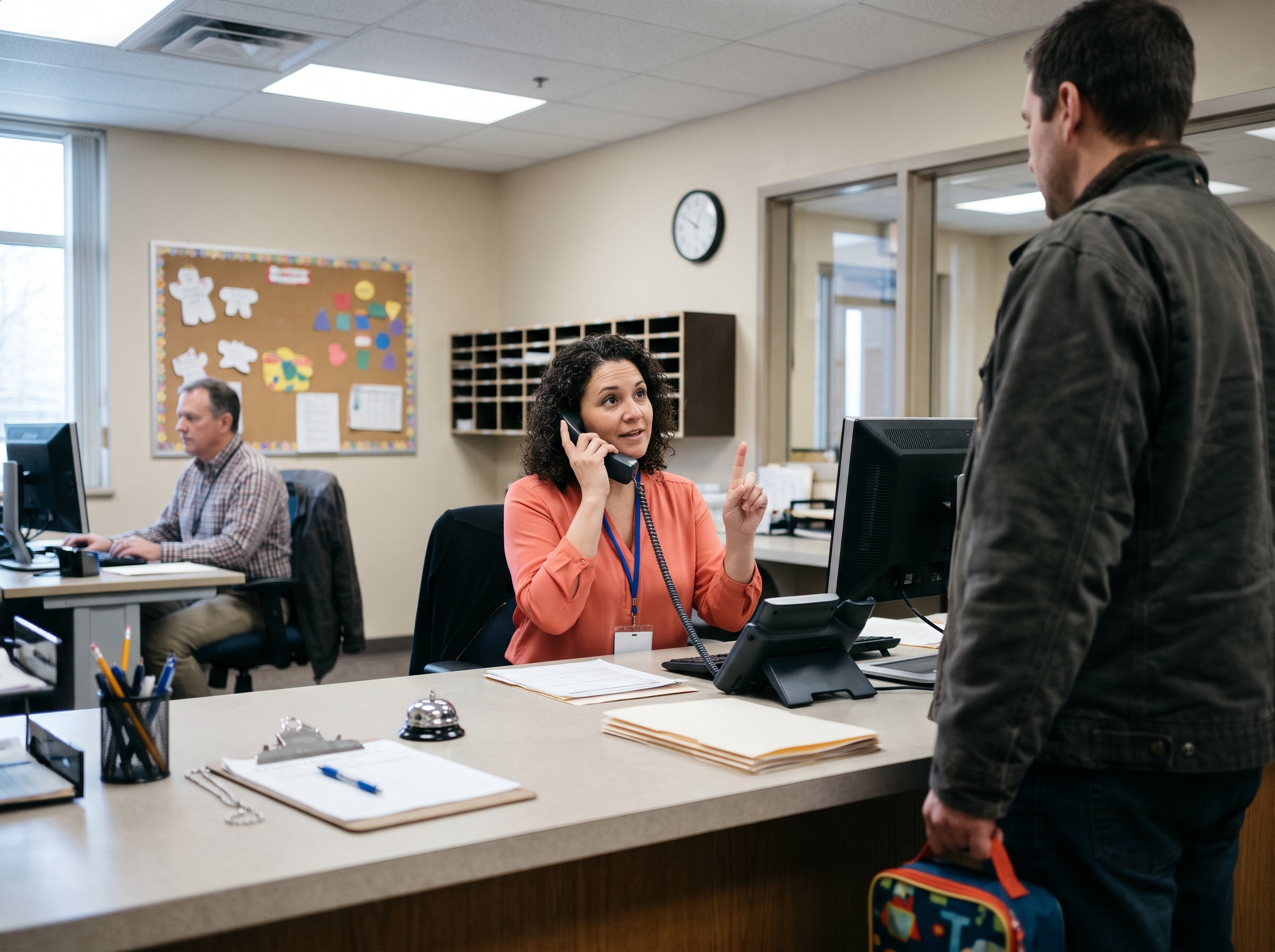
Implementation should be part of the decision because it determines whether the new phone system feels like an improvement or a disruption. Ask who will document extensions, greetings, call queues, business hours, emergency locations, and authorized administrators. Ask whether staff will be trained before go-live and whether someone will be available during the cutover.
A good implementation does not turn every employee into a telecom expert. It leaves your team with a system they can run. Office managers should know how to adjust schedules and greetings. IT should understand the network requirements and user administration. Leaders should know who to call when a problem affects operations.
How do you compare VoIP vendors step by step?
You compare VoIP vendors in eight steps. Most organizations can finish in two weeks without it becoming a second job.
- Write down how your calls work today List your phone numbers, who answers each one, what happens at lunch and after hours, and every device on a phone line, including fax machines, alarm panels, door phones, and paging. Every vendor should quote against the same list.
- Count endpoints, not employees Twenty employees can mean thirty-five devices once you add conference phones, lobby phones, classroom or shop phones, softphones, and analog adapters. Ask each vendor what counts as a billable user.
- Shortlist three vendors with different support models Include at least one national provider and one local or regional provider. You will learn more from the contrast than from three versions of the same company.
- Ask for a sample invoice Not a quote. An invoice for your user count at your address, showing the recurring total with every tax and fee, plus one-time charges. Match contract length and billing period across vendors.
- Walk through three real call scenarios The receptionist is out. Every person in the queue is busy. The office closes early for weather. Have each vendor show you, on their system, what the caller hears and who can change it.
- Ask the four operational questions Who manages my number port and what is the sequence? What happens to calls if my office loses power or internet? How are E911 locations entered and kept current? Who is with us on the day we go live?
- Call their support line and check references Call support late on a weekday and time how long it takes to reach someone who can change a setting. Then ask for two customers your size, in your industry, and call them.
- Score the vendors and total three years Rate each one on support, total cost, call flow help, porting, continuity, E911, and implementation. Put the three year cost beside the score. The right choice is usually obvious once both are on one page.
How does Carolina Digital Phone answer these questions?
Carolina Digital Phone answers them with a hands-on model: we plan the call flow with you, manage number porting, configure the platform, train your staff, and support you afterward from North Carolina. Here is the short version, so you can check it against the scorecard.
- Support. Our engineering support team is in downtown Greensboro. Customers reach them by dialing 611 from any of our phones or apps.
- Price. Plans run from $6 to $32 per user per month as of November 2026, month to month, with taxes and regulatory fees included. The price we quote is the price you pay.
- Platform. Service runs from data centers in downtown Greensboro, Research Triangle Park, and Dallas.
- E911. Locations are registered per phone, with a 933 test line. For schools we register down to the classroom.
- Experience. In business since 2000, serving businesses, K-12 schools, and government agencies in North Carolina, South Carolina, and Virginia.
That model will not be the right fit for every organization. It does reflect a standard worth holding any vendor to: they should still be accountable after the phones are installed. You can read more about why businesses choose Carolina Digital Phone, our history, and what we mean by a trusted business communications partner.
Picture a busy Tuesday
When you compare proposals, do not picture the sales demonstration. Picture the customer who needs the right department, the employee working off site, the school office handling an urgent call, and the administrator changing a holiday schedule.
Choose the vendor that gives your team a clear answer for those everyday moments.
Frequently asked questions
How do I compare VoIP vendors?
Compare VoIP vendors on seven things: the support model, the total monthly price with taxes and fees, help designing your call flow, how number porting is managed, the plan for power and internet outages, E911 location management, and who handles implementation. Ask each vendor for a sample invoice and walk through real call scenarios before you sign.
What is the difference between a VoIP vendor and a VoIP provider?
The terms are used the same way. A VoIP vendor or VoIP provider is a company that sells business phone service delivered over the internet. You will also see hosted VoIP, hosted PBX, cloud phone system, and UCaaS. Some vendors operate their own platform and others resell a platform run by another company.
What questions should I ask a VoIP provider before signing?
Ask who answers support calls and whether they can change your configuration, what the full invoice total will be, whether rates change after a promotion, what counts as a billable user, who manages number porting, what happens during an outage, how E911 locations are maintained, and what it costs to leave.
Is a local VoIP provider better than a national one?
Not automatically. A national provider can be a good fit for an organization with experienced IT staff, a simple setup, or offices spread across the country. A local provider is often a better fit when you want help designing call flow, on-site assistance, and a support team that knows your account. Match the support model to your operation.
How do local providers compare with national VoIP vendors like RingCentral, Nextiva, Ooma, Dialpad, Vonage, and 8x8?
The national brands offer broad feature sets, many software integrations, and low advertised starting prices, commonly with online ordering and support through large centers. A local provider such as Carolina Digital Phone competes on hands-on implementation, call flow design, local engineering support, and all-in pricing. Use the same checklist for both and compare the invoice total, not the advertised rate.
Why do VoIP quotes with the same features have different prices?
Because the per user price leaves out different things. Quotes vary on taxes and regulatory fees, phone purchase or rental, setup and training, features held in higher tiers, contract length, annual prepayment, and promotional rates that expire. Two proposals with the same feature list can differ by a large amount on the invoice.
What counts as a user on a VoIP quote?
It depends on the vendor. Some bill every device, including conference phones, lobby phones, and classroom phones, at the full user rate. Others offer lower cost plans for shared or common-area phones. Count your endpoints and ask how each type is billed.
How long does it take to switch VoIP vendors?
A small office can usually be designed, installed, and tested in a couple of weeks. The schedule is most often set by number porting, which depends on your current carrier and how well your account records match. Keep your old service active until the port completes.
Should I cancel my old phone service after I sign with a new VoIP vendor?
No. Keep the existing service active until your numbers have been ported and tested. Cancelling early can interfere with the port and put your phone numbers at risk. Your new vendor should give you the sequence in writing.
What should a VoIP vendor do about E911?
The vendor should provide a way to register a dispatchable location for each phone or user, explain who updates it when phones move, cover remote and softphone users, and help you test it. Your organization remains responsible for keeping locations accurate and training staff.
What happens to my phones if the internet goes down?
Phones at that location stop working, but a hosted phone system keeps running in the vendor's data centers. Calls can be routed to mobile phones, a softphone app on another connection, or another office. Ask each vendor how that is set up and who can trigger it.
How much do business VoIP vendors charge per user?
Advertised rates vary widely and often assume annual billing and exclude taxes, fees, and phones. Carolina Digital Phone plans run from $6 to $32 per user per month as of November 2026, month to month, with taxes and regulatory fees included in the quoted price.
Put us on your shortlist and ask us the hard questions
The experienced team at Carolina Digital Phone will walk through your real call scenarios, show you a sample invoice, and tell you plainly if another kind of provider would suit you better. We are a local company, and a real person answers when you call.
To talk with someone right now, call (336) 544-4000.
Discovery meetings are 15 to 30 minutes on Google Meet with an onboarding specialist, with no obligation. Schools and government agencies can reach our Gov/Edu team at (336) 543-0000.