

How To Guide · Phone Numbers
Direct Inward Dial Numbers vs. a Main Number: Which Fits?
A direct line for every team member, or one front door with an auto attendant and dial by name? It depends on how you want people to reach your staff.
Published: | Last updated:
"Here, let me give you my direct number." Six words, and a customer stops feeling like they are calling a company and starts feeling like they are calling a person.
That is the promise of a direct inward dial number. It is also the trap. Hand out enough direct numbers and your business no longer has a front door. It has forty side doors, some of them leading to desks nobody sits at anymore.
So which is better: a direct inward dial number for each team member, or one main number where an auto attendant or a dial-by-name directory connects the caller? After 26 years of setting up phone systems for businesses, schools, and government offices, my answer is that it depends on how you want clients to reach your staff. This guide will help you decide.
Local Business VoIP is the small-business site of Carolina Digital Phone, Inc., a Greensboro, North Carolina company that has provided hosted voice, business text messaging, and AI receptionist service since 2000.
Quick answer
A direct inward dial (DID) number is a full phone number that rings one person or department without going through a receptionist or menu. Use direct inward dial numbers for roles with ongoing one-to-one relationships, such as sales, account management, and casework. Use a main number with an auto attendant or dial by name for first-time callers, shared work, and offices with staff turnover. Most organizations do best with both.
- Direct inward dial (DID)
- A public ten-digit phone number that connects an outside caller straight to a specific person, group, or device in your phone system. Also called direct inward dialing, a direct number, or DDI.
- Main number
- The one published number for your organization, answered by a person or an auto attendant.
- Extension
- A short internal number, usually three or four digits, that reaches a person from inside the phone system or after the main number answers.
- Auto attendant
- The recorded greeting that answers the main number and routes callers by the key they press.
- Dial-by-name directory
- An auto attendant option that lets a caller spell a name on the keypad to reach a person without knowing the extension.
- Direct outward dial (DOD)
- The outbound counterpart to DID: the number your phone shows when you call out.
What is a direct inward dial number?
A direct inward dial number is a regular phone number that rings a specific person or department inside your organization, with no operator and no menu in between. To the caller it looks like any other ten-digit number. Behind the scenes, your phone system knows that this particular number belongs to this particular desk.
The idea is older than most people think. Before direct inward dialing, every call to a company arrived at a switchboard, and an operator plugged a cord into the right jack. Phone companies then began selling businesses whole blocks of numbers that shared a small set of lines. The Commonwealth of Virginia's technology agency still defines it that way: a company might rent 100 phone numbers that can be reached over eight physical lines. A hundred people got their own number without the company paying for a hundred lines.
On a hosted VoIP system the lines are gone altogether. A direct inward dial number is an entry in a table that says "when this number is dialed, ring this user." That makes direct numbers easy to add, easy to move, and easy to point at a desk phone, a smartphone app, or a whole team. It is also why the choice between direct numbers and a main number is no longer a hardware decision. It is a decision about how you want to be reached.
The appeal has not changed in sixty years. As TechTarget's definition puts it, with direct inward dialing callers feel they are calling a person rather than a company.
How is a direct inward dial number different from an extension?
An extension works inside your phone system. A direct inward dial number works from anywhere in the world. Most people on a business phone system have an extension. Only some of them need a direct number that points to it.
| Main number | Extension | Direct inward dial number | |
|---|---|---|---|
| What it looks like | (336) 555-0100 | 214 | (336) 555-0114 |
| Who can dial it | Anyone | Coworkers, or callers after the main number answers | Anyone |
| Where it goes | A receptionist or auto attendant | One person or group | One person or group, directly |
| Printed on | Your sign, website, and ads | The staff directory | Business cards and email signatures |
| Has a monthly cost | Yes | Part of the user's service | Yes, one for each number |
The 555 numbers are examples only.
Direct inward dial or a main number with an auto attendant: which works better?
Each one wins in different situations, and the honest way to compare them is factor by factor. Here is how I lay it out for a customer.
| What matters to you | Direct inward dial number for each person | Main number with auto attendant or dial by name |
|---|---|---|
| Speed for a repeat caller | Fastest. One call, one person. | Slower. A greeting and a key press first. |
| A first-time caller who does not know who to ask for | No help. They need a name and a number. | Built for this. The menu sorts them. |
| The personal touch | Strong. "Call me directly." | Depends on the greeting and who answers. |
| When that employee is out | The call can dead-end in voicemail unless you plan a backup. | The call goes to whoever is available. |
| When an employee leaves | Their number is on cards and in customers' phones. It must be redirected. | Nothing changes for the caller. |
| Seeing what is happening | Calls are spread over many numbers. | Calls come through one door you can measure. |
| Staff privacy and interruptions | Anyone with the number can ring the desk. | Calls can be screened or grouped. |
| Monthly cost | One more number for each person. | One number, or a handful. |
| What customers have to remember | A different number for each contact. | One number for everything. |
Notice that the rows where direct numbers lose are all about what happens when the person is not there. That is the whole risk. A direct inward dial number ties a relationship to a desk, and desks go empty: for lunch, for vacation, for good.
The number on four thousand business cards
A commercial insurance agency had a producer who was very good at her job. Over eleven years she handed out a lot of business cards, and every one had her direct number on it. So did her email signature, and so did the contact list in a few hundred customers' phones.
Then she took a job across town.
On the agency's old phone system, her direct number kept doing the only thing it knew how to do. It rang an empty desk four times and went to a mailbox with her voice on it. For about six weeks, clients with renewal questions left messages for someone who no longer worked there. A few of them found her new number on their own.
When the agency moved to a hosted system, the first thing we did was point that number at the account team, with a greeting that said they would be glad to help. It took a few minutes. It should have taken a few minutes on the day she left.
This story is a blend of several offices we have worked with. The details are changed. The lesson holds: a direct number belongs to your company, and it only stays yours if someone remembers to move it.

When do direct inward dial numbers work better?
When the caller already knows who they want, and the relationship is with a person more than with a department. If your customers say "my agent," "my attorney," "my rep," or "my caseworker," they should be able to dial that person.
- Sales representatives and account managers. A prospect who has to work through a menu to return a sales call often does not bother.
- Attorneys, advisors, accountants, and agents. Clients expect a direct line to the professional they hired.
- Case managers and counselors. People with an ongoing matter should not have to explain themselves to the front desk each time.
- Executives and department heads. Vendors, board members, and partners need a way in that does not depend on the receptionist's lunch hour.
- Remote and hybrid employees. A direct number that rings an app gives a home-based employee a real business line. See our guide to a phone system for remote and hybrid employees.
A direct inward dial number also keeps personal cell numbers out of circulation. If you do not issue direct numbers, your best people will hand out their own mobile numbers, and when they leave, those customers leave with them. I wrote about that in business calls on mobile without a personal number.
When does a main number with an auto attendant or dial by name work better?
When callers need the organization more than they need a particular person. That covers more calls than most owners expect.
- First-time callers. They do not know anyone's name. They know they need a quote, an appointment, or an answer.
- Shared work. If any of four people can schedule the appointment, the call should reach whichever of the four is free.
- High turnover or seasonal staff. One number that never changes beats a list that is out of date by spring.
- Small teams. In a five-person office where everyone hears the phone, direct numbers add cost and little else.
- Roles you want to protect from interruption. Engineers, clinicians, and teachers usually should not have a published line ringing at their elbow.
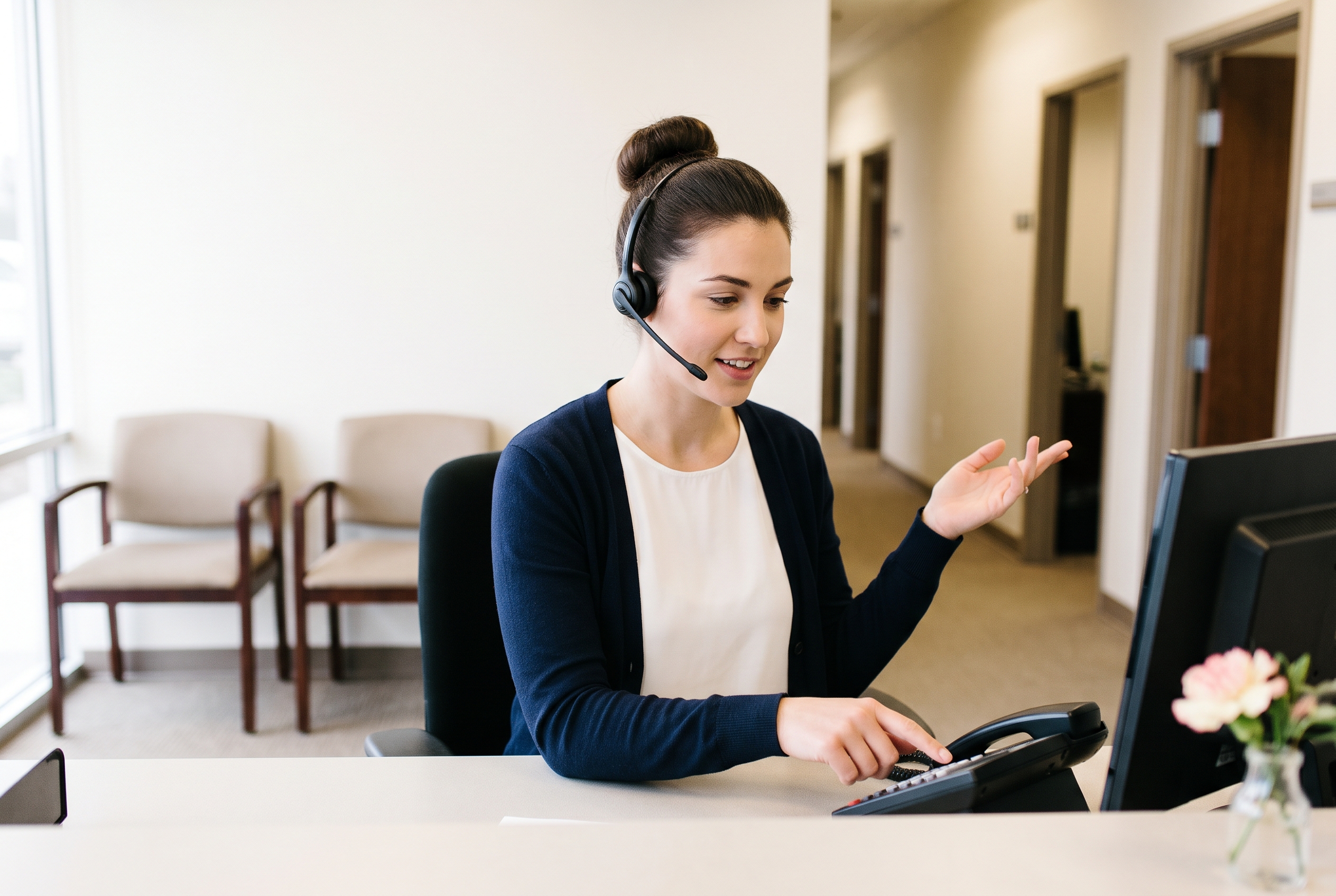
The dial-by-name directory deserves a mention of its own. It is the middle path: a caller reaches the main number, presses a key for the directory, spells the first few letters of a name, and is connected. Staff can be reached individually without each one having a published number. It works well for organizations with many employees who take only occasional outside calls. If you go this route, build the menu carefully. Our guide on how to build auto attendant menus that help covers it, and auto attendant versus receptionist covers who should answer first.
Should every employee have a direct inward dial number?
No. Assign direct numbers by role. The question to ask about each role is simple: does someone outside the building need to reach this specific seat again and again?
| Role | Direct inward dial number? | Why |
|---|---|---|
| Front desk or receptionist | No. This is the main number. | The front door should have one address. |
| Sales and account management | Yes, one each | Relationships are personal and return calls matter. |
| Attorneys, advisors, agents | Yes, one each | Clients expect to reach their professional. |
| Billing, scheduling, service | Yes, one for the department | Any trained person can help, so ring the group. |
| Executives | Yes, often with an assistant as backup | Direct access for a short list of people. |
| Technicians and field staff | Usually no | Dispatch or the office should coordinate. |
| Back-office and production staff | No. Extension and dial by name. | Few outside calls. Fewer interruptions. |
| Fax, alarm, and special lines | Yes, their own numbers | Equipment needs a number that never moves. |
The department line in the middle of that table is the most underused idea in business phone design. A direct number does not have to mean one person. "Call our billing line" gives the customer the speed of a direct number and gives you the coverage of a team.
How do direct numbers work for government agencies and schools?
The same way, with two extra considerations: the public's expectation of access, and emergency calling.
Residents expect to find a number for the department they need: utilities, permits, the tax office, the clerk. A direct number for each public-facing department, printed on the website and on every bill, saves the resident a menu and saves your main line the traffic. Individual direct numbers make sense for staff with ongoing cases, such as inspectors, social workers, and school counselors. For everyone else, a staff directory reached through the main number keeps the published list short and accurate through elections, reorganizations, and retirements. Our pages for government and K-12 schools go further.
Emergency calling is the consideration people miss. Federal rules for multi-line phone systems, summarized on the FCC's 911 requirements page, call for a notification to someone on site when 911 is dialed, and the national 911 program explains that the notification should include a callback number and the caller's location. A phone with its own direct number can be called back directly by a dispatcher if the call drops. A phone with only an internal extension cannot be dialed from outside, so the callback lands at the front desk or the main number. Neither setup is wrong, but you should know which one you have. Whichever you choose, each phone needs a dispatchable location on file, as explained in how to assign dispatchable E911 locations.
What do direct inward dial numbers cost, and are there enough to go around?
Each phone number carries a small monthly cost, so forty direct numbers cost more than four. On our service the cost of each number is shown on your written quote, and the monthly price we quote is the price you pay. For most organizations the cost of numbers is modest next to the cost of users. It is still a reason not to hand a direct number to every seat by default.
There is a wider reason too. Telephone numbers are a limited public resource. The Federal Communications Commission tracks how they are used, and reports that conservation measures have made it unnecessary to hand out more than a billion numbers that would otherwise have been assigned. North Carolina knows the squeeze firsthand. The Triad added area code 743 on top of 336, and the Triangle added 984 on top of 919, because the original codes ran short. If matching numbers matter to you, such as a run of consecutive direct numbers in your familiar area code, ask early. Our guide to North Carolina area codes for business explains the overlays.
And if you already have direct numbers you like, keep them. Direct inward dial numbers port to a new provider just as a main number does. List every one of them on the port request. Our number porting timeline guide walks through it.
What number should customers see when your staff calls out?
That depends on where you want the return call to go. Outbound caller ID is the other half of this decision, and it is the half most offices never think about.
| Show this number | When | The return call goes to |
|---|---|---|
| The employee's direct number | Sales, account managers, professionals with their own clients | That person, directly |
| A department number | Billing, scheduling, service teams | Whoever on the team is free |
| The main number | Staff who should not take direct callbacks, and most outbound calls from a school or clinic | The front desk or auto attendant |
A hosted phone system lets you set this per user. Customers are also more likely to answer a number they recognize, which is one more argument for showing your main number on calls to people who do not know the caller. For the rules on what you may display, see who needs compliant caller ID.
How do you set up direct inward dial numbers so they help?
Six steps. The fourth is the one that separates a good setup from the story about the business cards.
- List your roles, not your people Write down every role that talks to the outside world: front desk, sales, account managers, billing, service, department heads. Plan numbers around the role, because the role stays when the person leaves.
- Decide which roles need a direct inward dial number Give a direct number to roles with ongoing one-to-one relationships, such as sales representatives, attorneys, advisors, case managers, and executives. Send first-time and general callers to the main number.
- Add direct numbers for departments Billing, scheduling, service, and each public-facing government department usually deserve one direct number that rings a group. Callers skip the menu, and nobody's vacation takes the department offline.
- Set a no-answer path for every direct number Decide where each direct inward dial number goes when it is not answered: a teammate, a group, the front desk, or voicemail with a stated callback time. A direct number that ends in an unchecked mailbox is worse than a menu.
- Choose what callers see when your staff calls out Pick the outbound caller ID for each role. Show the direct number when you want customers to call that person back. Show the main number when you want return calls to come through the front door.
- Write down who has which number and review it when staff change Keep a simple list of every direct number, the role it belongs to, and where it rings. When someone leaves, point the number to their replacement or their team the same day, before the next customer calls.
On the no-answer path, the timing matters as much as the destination. A direct number that rings one desk for 45 seconds before anything happens feels like nobody is home. I covered ring times and backup coverage in when should calls overflow.
Not sure who in your office needs a direct number?
Schedule a 15 to 30 minute no-obligation discovery meeting on Google Meet at meet.carolinadigitalphone.com. An onboarding specialist will go through your roles with you and sketch a plan for direct numbers, department lines, and your main number, whether or not you are a customer yet.
So which should you choose?
Both, on purpose. The best phone plans I see have one well-run main number as the front door, direct inward dial numbers for the people whose work depends on a personal relationship, and department numbers for everything a team handles together.
What I would steer you away from are the two extremes. An office where every call goes through one menu makes your best customers wait in line with strangers. An office where everyone has a direct number and nobody answers the main line has no front door at all.
People do business with people they know, like, and trust. A direct number says "you know me." A good main number says "you can trust us to pick up." You want customers to hear both. That is how we have built systems since 2000, and it is part of why businesses choose Carolina Digital Phone. You can read our history and what it means to have a trusted partner for business communications. Our platform's full feature list is on our main site, and when you need a number moved, customers dial 611 to reach our engineering support team in downtown Greensboro.
Frequently asked questions about direct inward dial numbers
What is a direct inward dial number?
A direct inward dial number, or DID, is a regular ten-digit phone number that rings one specific person, department, or device inside an organization's phone system. An outside caller reaches that destination directly, without going through a receptionist or an auto attendant menu.
What does DID stand for, and is it the same as DDI?
DID stands for direct inward dial or direct inward dialing. In Europe and Australia the same service is called DDI, for direct dial-in. People also call it a direct number, a direct line, or a direct-dial number. They all mean the same thing.
What is the difference between a direct inward dial number and an extension?
An extension is a short internal number, usually three or four digits, that works inside your phone system or after a caller reaches your main number. A direct inward dial number is a full public phone number that anyone can dial from outside. A DID usually points to an extension.
Is a direct inward dial number better than a main number with an auto attendant?
Neither is better for everyone. Direct numbers work best when callers have an ongoing relationship with one person. A main number with an auto attendant or dial-by-name directory works best for first-time callers, shared work, and offices with frequent staff changes. Most organizations use both.
Does every employee need a direct inward dial number?
No. Give direct numbers to roles that customers, clients, or the public need to reach repeatedly, and to departments that handle one kind of request. Employees who rarely take outside calls can be reached by extension through the main number or the dial-by-name directory.
What happens to a direct inward dial number when an employee leaves?
The number belongs to the organization, not the employee. On a hosted phone system it can be pointed to the replacement, a teammate, or a group in a few minutes, so customers who dial the old direct number still reach your company.
Can a direct inward dial number ring a cell phone or an app?
Yes. On a hosted VoIP system a direct number can ring a desk phone, a mobile app, a desktop app, or all of them at once. The employee's personal cell number stays private, and the business keeps control of the number.
How much does a direct inward dial number cost?
Each phone number carries a small monthly cost, and the amount varies by provider. At Carolina Digital Phone the cost of each number is shown on your written quote, and the monthly price quoted is the price you pay.
Can we keep our existing direct numbers when we switch phone providers?
In most cases, yes. Direct inward dial numbers can be ported to a new provider the same way a main number can. List every direct number on the port request, including fax and department numbers, and keep the old service active until the transfer is complete.
How do direct inward dial numbers affect 911?
A phone with its own direct number can be called back directly by a 911 dispatcher if the call drops. A phone with only an internal extension cannot be dialed from outside, so the callback goes to a main or front desk number. Either way, each phone needs its own dispatchable location on file.
What is a dial-by-name directory?
A dial-by-name directory is an auto attendant option that lets a caller spell a person's name on the keypad and be connected, without knowing the extension. It gives callers a way to reach individuals through the main number when those individuals do not have published direct numbers.
How do I get help planning direct numbers with Carolina Digital Phone?
Call (336) 544-4000 to talk with someone right away, request a quick call back at quote.carolinadigitalphone.com, or schedule a 15 to 30 minute no-obligation discovery meeting with an onboarding specialist on Google Meet at meet.carolinadigitalphone.com.
Plan your direct numbers and your front door together
If you are not sure who should have a direct inward dial number, what your main number should do, or where calls go when someone leaves, the experienced team at Carolina Digital Phone can map it with you. We are a local company, and a real person answers when you call.
To talk with someone right now, call (336) 544-4000.
Discovery meetings are 15 to 30 minutes on Google Meet with an onboarding specialist, with no obligation. New business customers can also see our current special offer at quote.carolinadigitalphone.com. Schools and government agencies can reach our Gov/Edu team at (336) 543-0000.